
01
What the product does
The exact source types, event detail, investigation fields and retention depend on the selected connector and service tier.
Guardian Security Monitoring provides a connector-neutral operating layer for agent, collector and log-source health, security events, alert lifecycle, investigations and customer actions.
Guardian for Australian customers is built, operated and hosted in Australia. All Guardian customer and platform data, including backups and recovery copies, is maintained and stored within Australia.
Guardian retains supported source references, timestamps, source state, alert and investigation lifecycle, disposition, linked assets or users, evidence references, actions and escalation history. Customer views expose only allow-listed information.
The proposal identifies monitored endpoints, users, sources, collectors, ingestion, retention, connector, customer users, provider relationship and service coverage. Platform-only, provider-operated and Aegis-managed options can therefore be priced and supported differently.
Guardian does not imply unlimited ingestion, retention, source coverage, rule development, 24×7 monitoring, incident response or detection of every malicious event.
The exact source types, event detail, investigation fields and retention depend on the selected connector and service tier.
Technical console detail remains available to authorised operators while Guardian provides a consistent customer experience.
The customer can use Guardian with its own team, through an MSP, or with Aegis managed defence.
Security monitoring fails operationally when agents stop reporting, collectors are misconfigured, customer ownership is unclear, alert queues are noisy or investigation conclusions remain trapped in a specialist console.
Guardian separates the public product from any one underlying platform. Supported connectors provide source and event data; Guardian provides customer scope, source health, alert and investigation records, actions, evidence and reporting. Aegis adds the Damocles analyst service where selected.
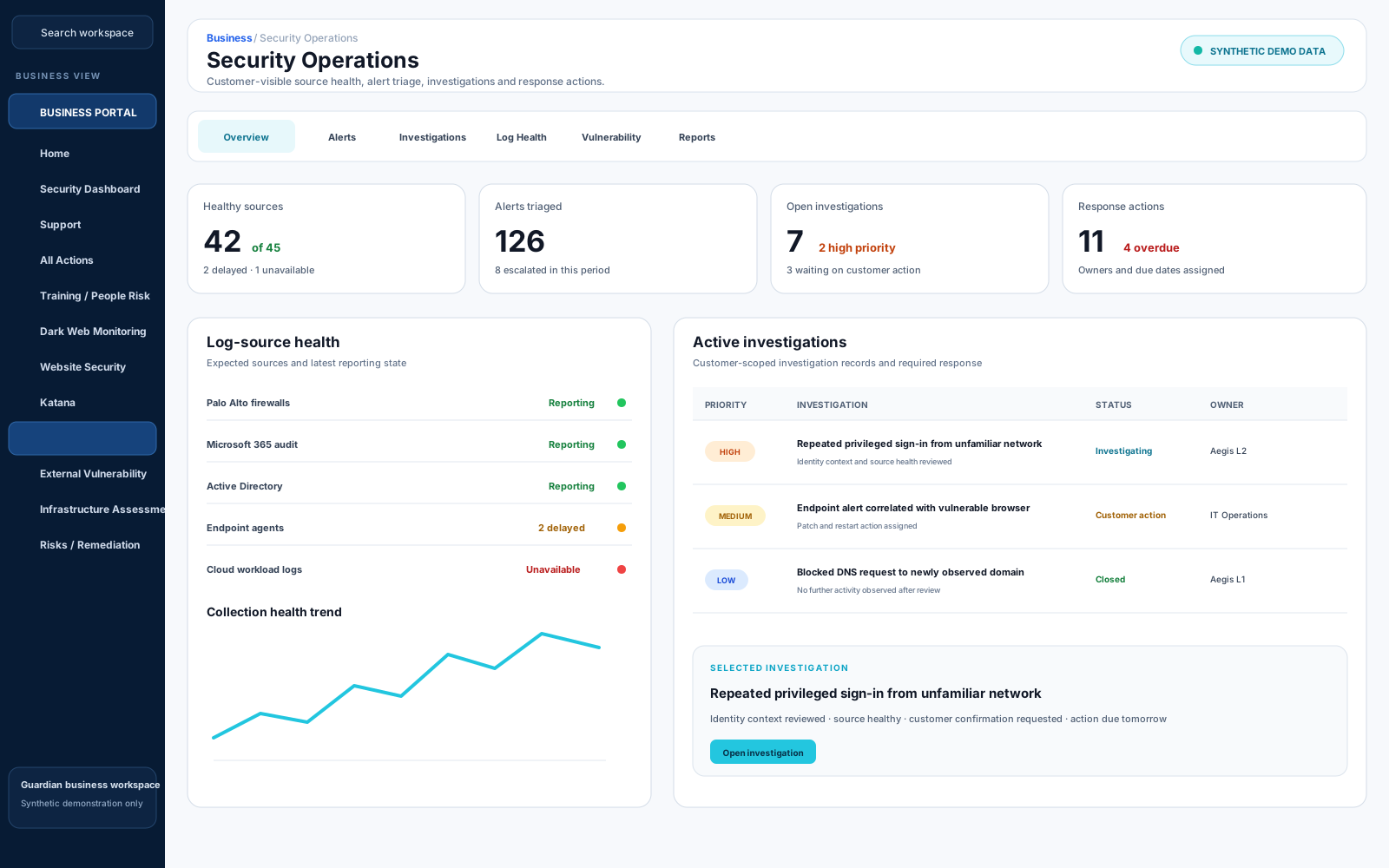
Identify expected, configured, healthy, stale, zero-data, degraded and unavailable sources instead of treating silence as security.
Present customer-scoped severity, status, priority, disposition, linked assets and investigation context.
Turn confirmed activity into an escalation, incident pathway, risk or All Action with ownership and evidence.
The exact source types, event detail, investigation fields and retention depend on the selected connector and service tier.
Track approved endpoint agents, last-seen state, protection relationship and customer mapping where supported.
Monitor collectors, gateways, APIs and integration jobs required to move security data.
Record expected firewalls, identity, cloud, endpoint, server and application sources and their reporting state.
Normalise supported alerts into consistent severity, status, priority, source, affected scope and timestamps.
Present customer-safe investigation title, priority, status, disposition, evidence and linked records.
Connect required response to owners, due dates, risks, All Actions and the agreed escalation path.
Technical console detail remains available to authorised operators while Guardian provides a consistent customer experience.
Source health, open alerts, active investigations, vulnerability context, actions and approved reports.
Expected sources, last-seen state, zero-data, degraded and unavailable conditions with practical context.
Customer-scoped alerts with source, severity, priority, status, affected assets or users and investigation linkage.
Customer-readable summary, timeline, disposition, evidence and required action without unrelated tenant or analyst-only data.
Monitored scope, source health, alert and investigation movement, escalations and unresolved actions.
Authorised customer switching, source mapping, health review, escalation and reporting through provider-scoped relationships.
The customer can use Guardian with its own team, through an MSP, or with Aegis managed defence.
Configure source authentication, customer mapping, field translation, health checks, synchronisation and safe failure behaviour.
Confirm expected sources, ownership, data path, log type, reporting state and customer escalation contacts.
Maintain approved detection, suppression, enrichment and routing logic where the selected platform and service include it.
Aegis analysts review source health and security signals during the contracted coverage window.
Investigate material activity using authorised context and escalate through the agreed customer or provider pathway.
Review source gaps, alert quality, investigations, tuning, open actions and reporting with the customer or MSP.
Platform capability and analyst coverage remain explicit so the customer knows what Guardian shows and what Damocles operates.
Confirm the expected agents, collectors, platforms, log types, retention and customer ownership.
Onboard the supported connector and establish expected source health and common activity.
Track source health and receive supported security events and alerts.
Prioritise material activity using source, asset, identity, vulnerability and customer context.
Gather authorised evidence, record the conclusion and invoke the agreed response path.
Track actions, review outcomes, tune approved logic and resolve source or service gaps.
The product does not require one platform brand; the implementation is selected according to the customer architecture and service model.
Connect a supported customer security-event platform and use Guardian for customer views, actions and reporting.
Allow the MSP to retain first-line monitoring and customer communication while Guardian provides scoped operations and reporting.
Add Damocles monitoring, triage, investigation and escalation to the selected compatible platform.
Use Guardian to identify missing or stale sources even where another team performs the alert analysis.
Combine different supported source platforms or regions while preserving customer scope and common Guardian records.
Maintain the Guardian customer workflow while the underlying event platform or connector is changed through an approved migration.
These details remain explicit before activation, but are grouped into one operating view so buyers can review the responsibilities without working through four separate page sections.
Implementation starts with an expected-source register and a clear analyst responsibility model. Damocles documents the customer, provider relationship, expected agents and log sources, source owners, data paths, retention, selected connector, available fields, service contacts and escalation levels. The first objective is to know what should be reporting before alert volume is treated as meaningful. Sample alerts and investigations are reviewed to confirm customer ownership, severity mapping, safe field exposure, disposition, evidence and action linkage. Unsupported fields or source limitations are documented before go-live. For managed monitoring, onboarding also defines coverage hours, triage rules, investigation depth, escalation contacts, response responsibilities, service review and the boundary between the customer, MSP and Damocles.
Compatible connectors allow the public product to remain stable as security technologies evolve. A security-monitoring connector must expose source health, customer ownership, supported alerts or events, stable identifiers, lifecycle state and safe error information. Guardian does not treat browser-supplied tenant identifiers or fuzzy naming as customer authority. The selected implementation can be commercial, self-hosted, provider-operated or customer-operated where a supported connector and operating model exist. The proposal identifies the specific connector and licensed features without making that vendor the public product. New connector requests are reviewed for API maturity, tenant isolation, source-health capability, event volume, rate limits, retention, investigation fields, evidence handling, supportability and engineering effort.
Customer records remain traceable without exposing credentials or raw upstream event payloads. Guardian retains supported source references, timestamps, source state, alert and investigation lifecycle, disposition, linked assets or users, evidence references, actions and escalation history. Customer views expose only allow-listed information. Source-health and service reports use persisted state. An unavailable connector, stale source or failed synchronisation is shown explicitly rather than converted into a healthy zero-alert result. Investigation evidence and analyst-only notes remain role scoped. Customer reports explain what was monitored and concluded without revealing unrelated tenants, credentials, internal platform identifiers or unsafe raw payloads.
Commercial scope separates platform capacity, connector work and analyst service. The proposal identifies monitored endpoints, users, sources, collectors, ingestion, retention, connector, customer users, provider relationship and service coverage. Platform-only, provider-operated and Aegis-managed options can therefore be priced and supported differently. Aegis coverage hours, triage, investigation, escalation and reporting are service commitments. They are not automatically included simply because the customer has a connected security-monitoring platform. The customer and MSP remain responsible for the systems, authorised access, source deployment, response authority and remediation allocated to them. Incident response, forensic acquisition and engineering are separate unless listed in the service schedule.
The exact answer is confirmed in the proposal and package schedule, but these points should be understood before activation.
Yes where a supported connector exists and the required customer mapping, source-health and lifecycle fields are available.
No. The selected platform performs event collection and analysis. Guardian provides the customer, provider, action, evidence and reporting layer.
Yes through Aegis, with the coverage, sources, triage, investigation and escalation stated in the service agreement.
Yes. The MSP and Damocles responsibility split is defined before onboarding and reflected in the provider and customer workflow.
Guardian shows the stale, zero-data, degraded or unavailable state and can create follow-up rather than presenting a false clean result.
Only where expressly contracted. Monitoring and escalation do not automatically include unlimited containment, forensics or recovery engineering.
Guardian does not imply unlimited ingestion, retention, source coverage, rule development, 24×7 monitoring, incident response or detection of every malicious event.
Unsupported source types, missing customer authority, incomplete fields, connector outages and unlicensed platform features remain explicit limitations.
The public product remains vendor neutral, but the proposal must identify the selected implementation, connector, quantities, service responsibilities and support boundaries.
We will map the expected sources, current technology, connector options, source health, alert lifecycle, investigation depth, escalation and service coverage.